New Delhi, April 27
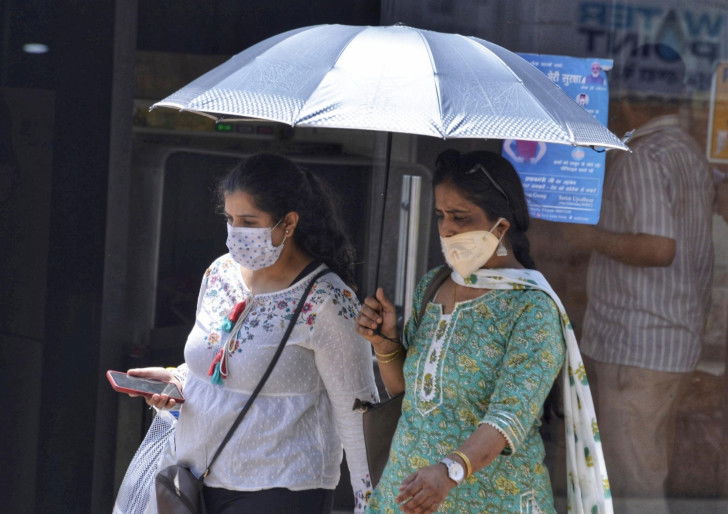
With the national capital recording a maximum temperature of 40.8 degrees Celsius on Tuesday and predicted to see a spike by two to three notches on Wednesday, public health experts warned the extreme heat so early in the year is particularly dangerous.
They say New Delhi could reach 44-45 degrees - approaching its record April temperature - while some parts of northern India could reach 46 degrees.
A deadly heatwave is building across India and Pakistan - home to around one in five people on earth - and new analysis by climate scientists has directly connected the heatwave with climate change.
Temperatures are forecast to rise to 50 degrees in Jacobabad, located in the Sindh province of Pakistan. It has always been notorious for its scorching summers.
An analysis by Mariam Zachariah and Friederike Otto of Imperial College London found the heat that hit India earlier this month is already much more common as a result of higher global temperatures caused by human activities.
Zachariah, Research Associate at the Grantham Institute of Imperial College London, said: "The recent high temperatures in India were made more likely by climate change. Before human activities increased global temperatures, we would have seen the heat that hit India earlier this month around once in 50 years.
"But now it is a much more common event. We can expect such high temperatures about once in every four years. And until net emissions are halted, it will continue to become even more common."
Otto, Senior Lecturer in Climate Science at the Grantham Institute of Imperial College London, said, "India's current heatwave has been made hotter by climate change that is the result of human activities like burning coal and other fossil fuels.
"This is now the case for every heatwave, everywhere in the world. Until net greenhouse gas emissions end, heatwaves in India and elsewhere will continue to become hotter and more dangerous."
Otto leads the World Weather Attribution group and was named as one of TIME magazine's most influential people of 2021.
The forecast temperatures are similar to those seen in the deadly heatwaves that hit India and Pakistan in May-June 2015, which killed at least 4,500 people.
In the deadly June 2015 heatwave, the New Delhi airport reached 44.6 degrees C, while the hottest temperatures in India were seen in Jharsuguda in Odisha at 49.4 degrees.
In Pakistan, Karachi saw temperatures of 45 degrees, while other cities in the Balochistan and Sindh provinces reached 49 degrees.
India has already suffered the hottest March in 122 years of weather data, and parts of the country are seeing wheat yields drop 10-35 per cent in part due to the unseasonal heat - as they try to make up the shortfall caused by the Russian invasion of Ukraine.
Some experts in India are also stressing the need for actions to help people survive the climate change-driven extreme heat.
Abhiyant Tiwari, Assistant Professor and Programme Manager, Gujarat Institute of Disaster Management, said: "While taking mitigation measures is a must to limit future warming, the extreme, frequent, and long-lasting spells of heat waves are no more a future risk.
"It is already here and is unavoidable. Our heat action plans must ensure adaptation measures like public cooling areas, ensuring uninterrupted electricity, access to safe drinking water, and changing the work hours of labourers for the most vulnerable ones at the bottom of the pyramid, especially during extreme heat days."
Dileep Mavalankar, Director with the Indian Institute of Public Health Gandhinagar (IIPHG), added: "The Indian Meteorological Department (IMD) is releasing forecast advisories for up to the next five days for 1,000 cities in India. Ahmedabad is on an orange alert on all the days with temperatures ranging between 43-44 degrees and this may increase further.
"People need to watch out for these advisories, stay indoors, keep themselves hydrated and rush to the nearest health centre if they feel moderate signs of heat-related illness. There's a special need to monitor the old and vulnerable, just like we did during COVID as they can develop heat strokes even when sitting at home."