Washington, Dec 7
The United States has issued a sharp warning about China's accelerating military expansion, calling Beijing's defence buildup "historic" and underscoring the need to urgently strengthen America's defence industrial base — a development with direct implications for India's security calculus in the Indo-Pacific.
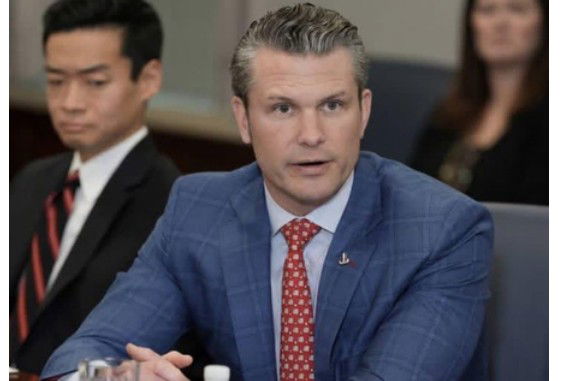
At the Reagan National Defense Forum, the US Secretary of War, Pete Hegseth, said Washington is "obviously well aware of their historic military buildup. It's right in front of us," pointing to China's rapid naval growth, its expanding nuclear arsenal, and its deepening military cooperation with Russia.
The moderator noted that China now has "the world's largest navy" and is rapidly modernising its nuclear forces. For every eight warships Beijing builds, the United States produces fewer than two. Chinese shipbuilding capacity, he said, is "230% greater than the United States's capability."
Responding to that assessment, the Secretary said the correct US response was internal reform and accelerated production: "The most important thing we can do is look inward and increase our urgency of ensuring we rebuild our defence industrial base in the arsenal of freedom."
He added that the Trump Administration has already undertaken "an entire acquisitions requirements and foreign military sales overhaul. Not a reform, not a tinkering… This is a complete game change in how we deliver systems to the battle. We have to, we don't have time."
He said the objective was to "be able to feel the best as quickly as possible," underscoring the administration's view that America must restore its defence production capacity at scale and at speed to deter China's expanding footprint.
While the Secretary did not directly reference India, his remarks align closely with New Delhi's strategic view of China's rising military power, particularly in the maritime domain. India has been monitoring Beijing's expanding naval presence in the Indian Ocean, its militarisation of the South China Sea, and its deepening military ties with Pakistan — all areas where stronger US preparedness could help stabilise the regional balance.
The Secretary also emphasised that the United States is approaching this challenge prudently but decisively: "We see it, we're aware, but we're also prudent in how we approach it, which is the way the president has approached it. And we'll do the same."
For India — which has intensified defence coordination with the United States through mechanisms such as the Quad, joint exercises, technology cooperation, and increasing focus on undersea and maritime surveillance — the Trump Administration's insistence on rebuilding American naval and industrial power is likely to be viewed as a significant pillar of Indo-Pacific stability.
China's rapid naval expansion and its ability to mass-produce ships, missiles and munitions at a pace unmatched by any Western power has been a long-standing concern in New Delhi. India has already stepped up maritime partnerships with the US, Japan and Australia, expanded naval outreach across the Indian Ocean, and invested in high-end capabilities including aircraft carriers, submarines, long-range surveillance aircraft and unmanned systems.
The United States has publicly stated in recent years that the Indo-Pacific is central to its global strategy, describing China as its "pacing challenge." The Trump Administration's push to overhaul defence acquisitions, increase production capacity, and invest in new technologies — including AI-enabled systems, hypersonics, and autonomous platforms — closely aligns with India's modernisation priorities.
The Pentagon has also broadened cooperation with India under the Initiative on Critical and Emerging Technologies (iCET), focusing on jet engines, munitions co-production, maritime domain awareness and supply-chain resilience. For New Delhi, a stronger US industrial base and a sustained American commitment to maritime deterrence reinforce its own ability to maintain a favourable balance of power in the Indo-Pacific.
Turning to counterterrorism and counter-narcotics operations — another area of strong US-India alignment — the Secretary detailed the September 2 strike off Venezuela, authorised at his level owing to its strategic implications. He said planners spent weeks developing intelligence and conducting an exhaustive review involving “military side, civilian side, lawyers, intel analysts, red teaming every aspect.”
Once satisfied with the criteria, he gave the order for the strike, later approving a follow-on attack when “a couple folks that could still be in the fight” were detected. He said, “I fully support that strike. I would've made the same call myself.”
He rejected a media claim that he had directed the killing of all individuals on board. “I don't know where you get your sources, but they suck,” he said. “Anybody that knows, knows that's not how things go. There's a very defined process.” He emphasised that US forces adhere strictly to laws of war and established protocols, including in cases involving survivors.
The Secretary highlighted that operations in the Caribbean were already forcing drug networks to change behaviour. “There aren't many people getting in boats right now, running drugs, which is the whole point,” he said, insisting the campaign aimed to stop organisations “poisoning and threatening American people.”
On emerging technologies, he said the future battlefield would rely on “both” artificial intelligence and autonomous systems. AI, he said, can “10, 100, a thousand x the speed of sensing,” while autonomy is already shaping lessons from Ukraine.
The Reagan National Defense Forum is considered as one of America’s most closely watched annual gatherings on US national security policy.